 fox
II/IDEC networks fox
II/IDEC networks
|
Login |
[>]
SCTPhantom - уязвимость в ядре Linux, предоставляющая root-доступ и выход из контейнера
lor.opennet
robot(spnet, 1) — All
2026-08-09 12:44:02
В реализации протокола SCTP, предлагаемой в ядре Linux.
https://www.opennet.ru/opennews/art.shtml?num=66056
lor.opennet
robot(spnet, 1) — All
2026-08-09 12:44:02
В реализации протокола SCTP, предлагаемой в ядре Linux.
https://www.opennet.ru/opennews/art.shtml?num=66056
[>]
Wine 11.15
lor.opennet
robot(spnet, 1) — All
2026-08-09 12:44:04
<img
itemprop="thumbnail"
class="medium-image"
src="https://www.linux.org.ru/images/23872/1000px.jpg"
alt="Wine 11.15"
srcset=", https://www.linux.org.ru/images/23872/original.jpg 410w"
sizes="100vw" style="position: absolute; max-height: 90vh"
width=1000 height=976>
8 августа 2026 года [ состоялся выпуск Wine 11.15 ]( https://www.winehq.org/news/2026080801 ) — очередной экспериментальной версии свободного слоя совместимости для запуска Windows-приложений в Linux, macOS и других Unix-подобных системах. В релиз вошли поддержка сборки ARM64EC в режиме MinGW, локальная аутентификация NTLM, новые алгоритмы выработки ключей в BCrypt и дополнительные преобразования графических форматов в WindowsCodecs. Всего разработчики закрыли 41 ранее зарегистрированную ошибку.
Одним из основных изменений стала [ поддержка сборки ARM64EC при использовании MinGW ]( https://gitlab.winehq.org/wine/wine/-/releases/wine-11.15 ) . ARM64EC (Emulation Compatible) — разработанный Microsoft ABI для Windows на ARM, позволяющий в рамках одного процесса сочетать код, выполняемый непосредственно на ARM64, и компоненты x86-64, запускаемые посредством трансляции. Благодаря этому приложение не обязательно переносить на ARM целиком: отдельные библиотеки можно постепенно заменять нативными ARM64EC-версиями, сохраняя совместимость с оставшимися x86-64-компонентами. [ Microsoft использует именно такой подход ]( https://learn.microsoft.com/en-us/windows/arm/arm64ec ) для перехода существующих Windows-приложений на ARM. Поддержка этого режима в MinGW продолжает работу Wine по улучшению запуска Windows-программ на ARM64-системах.
Среди остальных основных изменений Wine 11.15 разработчики выделяют:
( [ читать дальше... ]( https://www.linux.org.ru/news/opensource/18355551#cut ) )
lor.opennet
robot(spnet, 1) — All
2026-08-09 12:44:04
<img
itemprop="thumbnail"
class="medium-image"
src="https://www.linux.org.ru/images/23872/1000px.jpg"

alt="Wine 11.15"
srcset=", https://www.linux.org.ru/images/23872/original.jpg 410w"

sizes="100vw" style="position: absolute; max-height: 90vh"
width=1000 height=976>
8 августа 2026 года [ состоялся выпуск Wine 11.15 ]( https://www.winehq.org/news/2026080801 ) — очередной экспериментальной версии свободного слоя совместимости для запуска Windows-приложений в Linux, macOS и других Unix-подобных системах. В релиз вошли поддержка сборки ARM64EC в режиме MinGW, локальная аутентификация NTLM, новые алгоритмы выработки ключей в BCrypt и дополнительные преобразования графических форматов в WindowsCodecs. Всего разработчики закрыли 41 ранее зарегистрированную ошибку.
Одним из основных изменений стала [ поддержка сборки ARM64EC при использовании MinGW ]( https://gitlab.winehq.org/wine/wine/-/releases/wine-11.15 ) . ARM64EC (Emulation Compatible) — разработанный Microsoft ABI для Windows на ARM, позволяющий в рамках одного процесса сочетать код, выполняемый непосредственно на ARM64, и компоненты x86-64, запускаемые посредством трансляции. Благодаря этому приложение не обязательно переносить на ARM целиком: отдельные библиотеки можно постепенно заменять нативными ARM64EC-версиями, сохраняя совместимость с оставшимися x86-64-компонентами. [ Microsoft использует именно такой подход ]( https://learn.microsoft.com/en-us/windows/arm/arm64ec ) для перехода существующих Windows-приложений на ARM. Поддержка этого режима в MinGW продолжает работу Wine по улучшению запуска Windows-программ на ARM64-системах.
Среди остальных основных изменений Wine 11.15 разработчики выделяют:
( [ читать дальше... ]( https://www.linux.org.ru/news/opensource/18355551#cut ) )
[>]
Polychromatic 0.9.8
lor.opennet
robot(spnet, 1) — All
2026-08-09 12:44:04
<img
itemprop="thumbnail"
class="medium-image"
src="https://www.linux.org.ru/images/23873/1000px.jpg"
alt="Polychromatic 0.9.8"
srcset="images/23873/500px.jpg 500w, images/23873/1000px.jpg 1000w, https://www.linux.org.ru/images/23873/original.jpg 1280w"
sizes="100vw" style="position: absolute; max-height: 90vh"
width=1000 height=625>
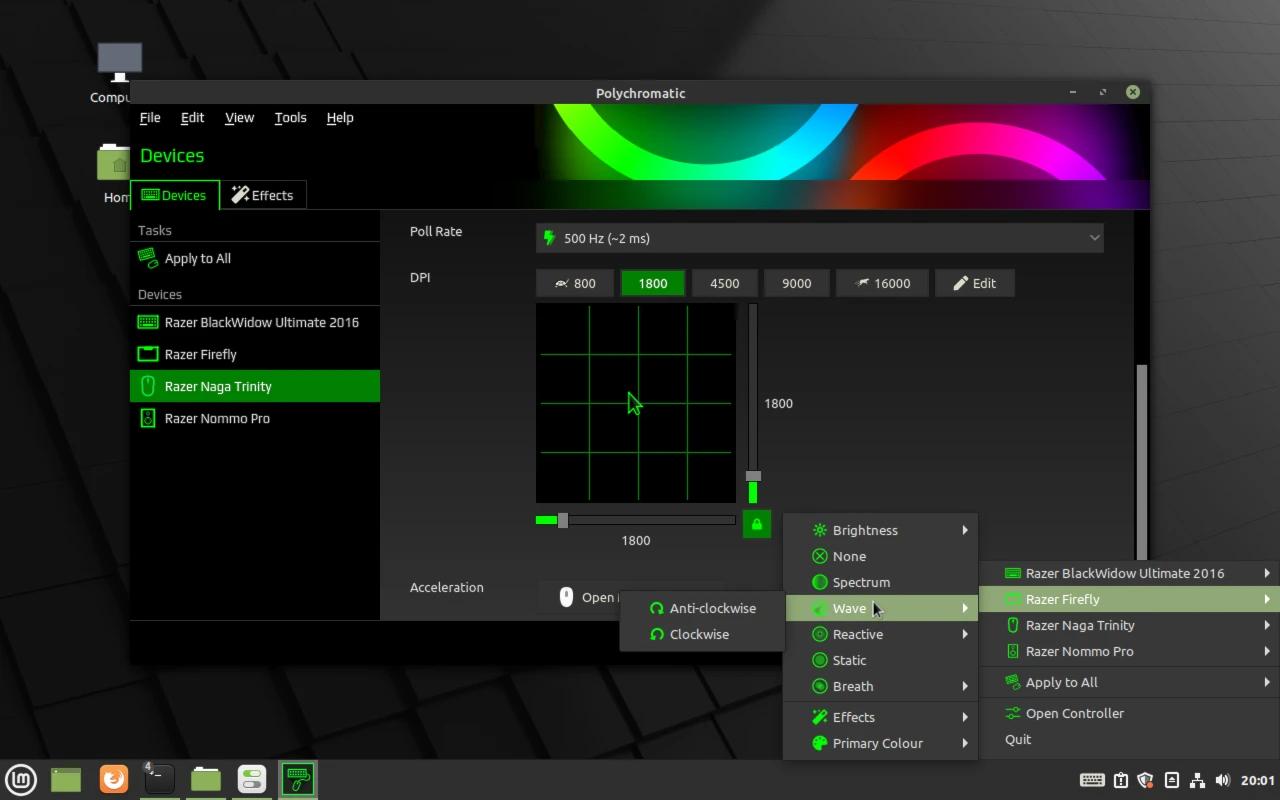
Polychromatic не содержит собственных драйверов оборудования, а работает как графическая оболочка над [ OpenRazer ]( https://github.com/openrazer/openrazer ) , предоставляющим драйвер ядра, фоновый D-Bus-сервис и Python API. Через приложение можно изменять яркость и режимы подсветки, настраивать DPI и частоту опроса совместимых устройств, управлять параметрами через системный трей и создавать собственные RGB-эффекты.
Главным функциональным изменением Polychromatic 0.9.8 стала [ карта клавиатуры Razer Blade 16 образца 2023 года ]( https://github.com/polychromatic/polychromatic/pull/592 ) . Драйверная поддержка ноутбука появилась не в этом релизе: модель с USB-идентификатором 1532:029F уже поддерживается OpenRazer. Новая карта нужна самому Polychromatic для корректного отображения физического расположения клавиш и адресуемых светодиодов при настройке подсветки.
( [ читать дальше... ]( https://www.linux.org.ru/news/hardware/18355552#cut ) )
lor.opennet
robot(spnet, 1) — All
2026-08-09 12:44:04
<img
itemprop="thumbnail"
class="medium-image"
src="https://www.linux.org.ru/images/23873/1000px.jpg"

alt="Polychromatic 0.9.8"
srcset="images/23873/500px.jpg 500w, images/23873/1000px.jpg 1000w, https://www.linux.org.ru/images/23873/original.jpg 1280w"
sizes="100vw" style="position: absolute; max-height: 90vh"
width=1000 height=625>
Polychromatic не содержит собственных драйверов оборудования, а работает как графическая оболочка над [ OpenRazer ]( https://github.com/openrazer/openrazer ) , предоставляющим драйвер ядра, фоновый D-Bus-сервис и Python API. Через приложение можно изменять яркость и режимы подсветки, настраивать DPI и частоту опроса совместимых устройств, управлять параметрами через системный трей и создавать собственные RGB-эффекты.
Главным функциональным изменением Polychromatic 0.9.8 стала [ карта клавиатуры Razer Blade 16 образца 2023 года ]( https://github.com/polychromatic/polychromatic/pull/592 ) . Драйверная поддержка ноутбука появилась не в этом релизе: модель с USB-идентификатором 1532:029F уже поддерживается OpenRazer. Новая карта нужна самому Polychromatic для корректного отображения физического расположения клавиш и адресуемых светодиодов при настройке подсветки.
( [ читать дальше... ]( https://www.linux.org.ru/news/hardware/18355552#cut ) )
[>]
Quake Celebrates 30th Anniversary: New Official Episode With New Maps and Mechanics
bot.slashdot
robot(spnet, 1) — All
2026-08-09 14:22:01
To celebrate Quake's 30th anniversary, Bethesda released "a brutal new episode" — a new campaign chapter titled Dawn of the Machine "delivering ferocious combat, labyrinthine level design, and nightmarish realms that twist reality beyond recognition..."
Face deadly new twists on familiar foes, including the Rocket Ogre, Demo Dog, Blood Shambler, and more. Each variant introduces lethal new behaviours — from overwhelming firepower to explosive death traps — forcing you to rethink every encounter. Expand your arsenal with brutal variants inspired by classic Quake expansions, including the Super Axe — unleashing lightning on successive strikes — and the Laser Cannon, firing ricocheting projectiles that tear through enemies from every angle... Reality is never stable. Shift between dimensions to solve puzzles and navigate the world, or find hidden secrets scattered throughout the realms. Face enemies that rise again or transform after death, and experience encounters where the rules change without warning — forcing you to adapt or be overrun.
More details from Ars Technica:
This is part of a series of new campaign chapters, all developed by MachineGames "in collaboration with id Software." MachineGames is best known for making the games in the relatively recent Wolfenstein reboot series, as well as Indiana Jones and the Great Circle. The Quake maps are made by a team dubbed "Quake Club," which includes several MachineGames employees who work on Quake maps in their spare time.
The ambition and scope of some of these maps is beyond what was typical for Quake maps back in the late '90s, thanks in part to the team's use of TrenchBroom, a newer map editor that works well on modern systems and is easier to work with and more capable than what folks were using in those days. There are 19 new levels, and they have several new gameplay gimmicks, like a time loop mechanic and a disorienting-but-cool teleportation system that makes it look like the levels are changing on the fly — kind of similar to the multi-time-period levels we saw in Titanfall 2 or Dishonored 2, though in these Quake maps the time shifts happen without player input. There's also new music... The new maps have been added to the campaign list in the remastered version of Quake, and like that remaster, they're available free to anyone who already owns Quake on Steam, as well as Quake on current and last-gen PlayStation, Xbox, and Nintendo consoles.
[ Read more of this story ]( https://games.slashdot.org/story/26/08/09/0628245/quake-celebrates-30th-anniversary-new-official-episode-with-new-maps-and-mechanics?utm_source=atom1.0moreanon&utm_medium=feed ) at Slashdot.
bot.slashdot
robot(spnet, 1) — All
2026-08-09 14:22:01
To celebrate Quake's 30th anniversary, Bethesda released "a brutal new episode" — a new campaign chapter titled Dawn of the Machine "delivering ferocious combat, labyrinthine level design, and nightmarish realms that twist reality beyond recognition..."
Face deadly new twists on familiar foes, including the Rocket Ogre, Demo Dog, Blood Shambler, and more. Each variant introduces lethal new behaviours — from overwhelming firepower to explosive death traps — forcing you to rethink every encounter. Expand your arsenal with brutal variants inspired by classic Quake expansions, including the Super Axe — unleashing lightning on successive strikes — and the Laser Cannon, firing ricocheting projectiles that tear through enemies from every angle... Reality is never stable. Shift between dimensions to solve puzzles and navigate the world, or find hidden secrets scattered throughout the realms. Face enemies that rise again or transform after death, and experience encounters where the rules change without warning — forcing you to adapt or be overrun.
More details from Ars Technica:
This is part of a series of new campaign chapters, all developed by MachineGames "in collaboration with id Software." MachineGames is best known for making the games in the relatively recent Wolfenstein reboot series, as well as Indiana Jones and the Great Circle. The Quake maps are made by a team dubbed "Quake Club," which includes several MachineGames employees who work on Quake maps in their spare time.
The ambition and scope of some of these maps is beyond what was typical for Quake maps back in the late '90s, thanks in part to the team's use of TrenchBroom, a newer map editor that works well on modern systems and is easier to work with and more capable than what folks were using in those days. There are 19 new levels, and they have several new gameplay gimmicks, like a time loop mechanic and a disorienting-but-cool teleportation system that makes it look like the levels are changing on the fly — kind of similar to the multi-time-period levels we saw in Titanfall 2 or Dishonored 2, though in these Quake maps the time shifts happen without player input. There's also new music... The new maps have been added to the campaign list in the remastered version of Quake, and like that remaster, they're available free to anyone who already owns Quake on Steam, as well as Quake on current and last-gen PlayStation, Xbox, and Nintendo consoles.
[ Read more of this story ]( https://games.slashdot.org/story/26/08/09/0628245/quake-celebrates-30th-anniversary-new-official-episode-with-new-maps-and-mechanics?utm_source=atom1.0moreanon&utm_medium=feed ) at Slashdot.
[>]
Flock Camera Vandalism Continues Around America, While 100 Communities Reject ALPRs
bot.slashdot
robot(spnet, 1) — All
2026-08-09 16:22:01
Dozens of Flock cameras have been vandalized around Dallas Texas in the last six months, reports a local news station. In Utah, ABC News reports, a county sheriff's office even said Wednesday a Flock camera was even vandalized within days of its being installed. And in the Minnesota city of Winona, "Every Flock license plate reader camera operated by the Winona Police Department has been sawed off and stolen in what investigators believe was a coordinated theft," according to local media:
All eight cameras were taken August 1, according to the Winona Police Department. A patrol officer first noticed the cameras had not sent any alerts in 24 hours. When officers checked the locations, they found the cameras had been cut from their poles and taken. The poles were left behind.
Two additional Flock cameras on the Mississippi River Bridge, owned by Buffalo County, were also stolen in the same manner...
The thefts are part of a broader national trend. Flock cameras have been vandalized and cut down in communities across the country.
When someone in Florida filmed a damaged Flock camera lying in the grass in Florida, their footage attracted 980,000 views on social media, according to a local news report, with the uploader saying "Most of the people that are commenting are against Flock cameras." But that report adds it's one of at least five cameras recently damaged just in Florida:
- In another incident, investigators "found the black camera and its pole lying on the ground."
- Two days later, sheriff's deputies found a camera destroyed "with pieces scattered on the ground. Deputies reported the damage appeared to have been caused by a blunt object."
- On July 31, "Police said two camera poles had been intentionally cut in half, causing an estimated $10,000 in damage to the system."
In West Virginia 20-year-old Wesley Jackson has been arrested for allegedly vandalizing Flock cameras, with another 20-year-old (a university student) now arrested for being his accomplice, according to a local news report. Ironically, Jackson's arrest was made possible partly by information from... automated license plate readers.
But the Washington Post notes there's now a flood of Facebook commenters jokingly offering to provide a fake alibi:
"Couldn't have been him — we were out counting blades of grass," said one of the 29,000 commenters on a post about the arrest from the local news station WDTV. Others attested that the man, Wesley Jackson, had been helping them "replace the roof on a homeless shelter," "playing halo 2," "changing the tires" on their car or giving their "doggie a treat" at the time the cameras were destroyed.
Meanwhile, the anti-surveillance group DeFlock reports 100 communities have now rejected automated license plate readers. Wednesday an Arizona county sheriff explained to his local Board of Supervisors why he will not renew his office's contract with Flock when it expires next month. Local Arizona media reports:
"We have a camera system that can do facial recognition technology and can start building a data set on what our citizens are doing on a day-to-day basis," Teeple told supervisors. "That, in my training and experience, is a huge Fourth Amendment violation."
Recently an Arizona man even told his city council he'd be launching AI-powered satellites to monitor "where government officials go, where they stop, who they meet with, and when they return home," reports 404 Media:
It would be no different than how the city monitors its citizens using Flock cameras, he said...
He said he'd already started compiling profiles on their vehicles, spouses vehicles, children's vehicles, and planned to combine that data with Bluetooth signals, advertising IDs, and commercial data sources, "so our authorized users can replay the movements of every government official and their immediate family," he said. Local businesses would be invited to join the network, to "protect" officials while they shop, eat at restaurants, and move around the city.
And CNET reports "a quiet battle is happening across the US" between "towns working to adopt Flock Safety systems and those trying to ban them entirely."
From major cities like Los Angeles canceling its Flock contract to towns wrapping Flock AI cams in plastic bags because Flock won't take them down, it's a wild time for surveillance and questions about government accountability.
[ Read more of this story ]( https://yro.slashdot.org/story/26/08/08/059204/flock-camera-vandalism-continues-around-america-while-100-communities-reject-alprs?utm_source=atom1.0moreanon&utm_medium=feed ) at Slashdot.
bot.slashdot
robot(spnet, 1) — All
2026-08-09 16:22:01
Dozens of Flock cameras have been vandalized around Dallas Texas in the last six months, reports a local news station. In Utah, ABC News reports, a county sheriff's office even said Wednesday a Flock camera was even vandalized within days of its being installed. And in the Minnesota city of Winona, "Every Flock license plate reader camera operated by the Winona Police Department has been sawed off and stolen in what investigators believe was a coordinated theft," according to local media:
All eight cameras were taken August 1, according to the Winona Police Department. A patrol officer first noticed the cameras had not sent any alerts in 24 hours. When officers checked the locations, they found the cameras had been cut from their poles and taken. The poles were left behind.
Two additional Flock cameras on the Mississippi River Bridge, owned by Buffalo County, were also stolen in the same manner...
The thefts are part of a broader national trend. Flock cameras have been vandalized and cut down in communities across the country.
When someone in Florida filmed a damaged Flock camera lying in the grass in Florida, their footage attracted 980,000 views on social media, according to a local news report, with the uploader saying "Most of the people that are commenting are against Flock cameras." But that report adds it's one of at least five cameras recently damaged just in Florida:
- In another incident, investigators "found the black camera and its pole lying on the ground."
- Two days later, sheriff's deputies found a camera destroyed "with pieces scattered on the ground. Deputies reported the damage appeared to have been caused by a blunt object."
- On July 31, "Police said two camera poles had been intentionally cut in half, causing an estimated $10,000 in damage to the system."
In West Virginia 20-year-old Wesley Jackson has been arrested for allegedly vandalizing Flock cameras, with another 20-year-old (a university student) now arrested for being his accomplice, according to a local news report. Ironically, Jackson's arrest was made possible partly by information from... automated license plate readers.
But the Washington Post notes there's now a flood of Facebook commenters jokingly offering to provide a fake alibi:
"Couldn't have been him — we were out counting blades of grass," said one of the 29,000 commenters on a post about the arrest from the local news station WDTV. Others attested that the man, Wesley Jackson, had been helping them "replace the roof on a homeless shelter," "playing halo 2," "changing the tires" on their car or giving their "doggie a treat" at the time the cameras were destroyed.
Meanwhile, the anti-surveillance group DeFlock reports 100 communities have now rejected automated license plate readers. Wednesday an Arizona county sheriff explained to his local Board of Supervisors why he will not renew his office's contract with Flock when it expires next month. Local Arizona media reports:
"We have a camera system that can do facial recognition technology and can start building a data set on what our citizens are doing on a day-to-day basis," Teeple told supervisors. "That, in my training and experience, is a huge Fourth Amendment violation."
Recently an Arizona man even told his city council he'd be launching AI-powered satellites to monitor "where government officials go, where they stop, who they meet with, and when they return home," reports 404 Media:
It would be no different than how the city monitors its citizens using Flock cameras, he said...
He said he'd already started compiling profiles on their vehicles, spouses vehicles, children's vehicles, and planned to combine that data with Bluetooth signals, advertising IDs, and commercial data sources, "so our authorized users can replay the movements of every government official and their immediate family," he said. Local businesses would be invited to join the network, to "protect" officials while they shop, eat at restaurants, and move around the city.
And CNET reports "a quiet battle is happening across the US" between "towns working to adopt Flock Safety systems and those trying to ban them entirely."
From major cities like Los Angeles canceling its Flock contract to towns wrapping Flock AI cams in plastic bags because Flock won't take them down, it's a wild time for surveillance and questions about government accountability.
[ Read more of this story ]( https://yro.slashdot.org/story/26/08/08/059204/flock-camera-vandalism-continues-around-america-while-100-communities-reject-alprs?utm_source=atom1.0moreanon&utm_medium=feed ) at Slashdot.
[>]
GNOME Receiving Additional Design Help From Germany's Sovereign Tech Agency Fellowship
bot.slashdot
robot(spnet, 1) — All
2026-08-09 19:22:01
The new GNOME Boxes app for accessing virtual systems has reached beta, announced This Week in GNOME. There's also been more work on the Sushi file previewer for Nautilus, and Papers 51 Beta can now add visual signatures to PDF documents.
But Phoronix noted one more announcement. "Germany's Sovereign Tech Agency announced earlier this year a new fellowship program and now as part of that, for the next two years GNOME has a fellow dedicated to working on design and community management... paid to help developers with design feedback and reviews, mock-up creation, and other GNOME design related efforts..."
From the blog post by GNOME Design Team member Philipp Sauberzweig:
I have been contributing to GNOME design as a volunteer for several years... I believe that it's essential for a free and democratic society to ensure free and independent access to these technologies. To achieve this goal, end-user devices based on free and open-source software are key, and the GNOME desktop and its app ecosystem offer a powerful alternative to proprietary platforms...
This two-year fellowship is a great honor and marks a significant change in my life. It is a unique opportunity for me to devote my skills and experience entirely to a project I strongly believe in.
During my two-year fellowship, I will support GNOME maintainers and developers with design feedback and reviews, create mockups, and coordinate efforts to standardize design patterns. My other activities focus on lasting improvements through two strategic initiatives: expanding the design community to increase capacity and enhancing our design tooling to reduce overhead and simplify onboarding... To attract new contributors, I will increase the visibility of design work by writing regular blog posts, giving presentations, and running workshops at conferences and hackathons. New contribution opportunities for newcomers will be created with clear instructions for independent activities such as collecting state-of-the-art examples, running accessibility and user tests, and creating mockups. Design reviews will be used as mentorship opportunities, pairing regular design contributors with experienced designers for peer review and knowledge sharing...
If you're interested in contributing to GNOME design, check out the Design Team page on the Welcome to GNOME website, familiarize yourself with the Human Interface Guidelines, and join our Matrix channel. If you're a GNOME developer feel free to reach out to me via Matrix and involve me in design reviews.
Jakub Beránek from the Rust compiler and infrastructure team also earned a fellowship in Germany's Sovereign Tech program, focusing on improving the Rust toolchain's tooling and infrastructure for Rust's developers.
Other fellows include Pablo Neira Ayuso (Linux kernel maintainer for the Netfilter subsystem), CPython core developer Stan Ulbrych, and Python core developer Hugo van Kemenade, FreeBSD contributor Alexander Ziaee.
[ Read more of this story ]( https://news.slashdot.org/story/26/08/09/0519238/gnome-receiving-additional-design-help-from-germanys-sovereign-tech-agency-fellowship?utm_source=atom1.0moreanon&utm_medium=feed ) at Slashdot.
bot.slashdot
robot(spnet, 1) — All
2026-08-09 19:22:01
The new GNOME Boxes app for accessing virtual systems has reached beta, announced This Week in GNOME. There's also been more work on the Sushi file previewer for Nautilus, and Papers 51 Beta can now add visual signatures to PDF documents.
But Phoronix noted one more announcement. "Germany's Sovereign Tech Agency announced earlier this year a new fellowship program and now as part of that, for the next two years GNOME has a fellow dedicated to working on design and community management... paid to help developers with design feedback and reviews, mock-up creation, and other GNOME design related efforts..."
From the blog post by GNOME Design Team member Philipp Sauberzweig:
I have been contributing to GNOME design as a volunteer for several years... I believe that it's essential for a free and democratic society to ensure free and independent access to these technologies. To achieve this goal, end-user devices based on free and open-source software are key, and the GNOME desktop and its app ecosystem offer a powerful alternative to proprietary platforms...
This two-year fellowship is a great honor and marks a significant change in my life. It is a unique opportunity for me to devote my skills and experience entirely to a project I strongly believe in.
During my two-year fellowship, I will support GNOME maintainers and developers with design feedback and reviews, create mockups, and coordinate efforts to standardize design patterns. My other activities focus on lasting improvements through two strategic initiatives: expanding the design community to increase capacity and enhancing our design tooling to reduce overhead and simplify onboarding... To attract new contributors, I will increase the visibility of design work by writing regular blog posts, giving presentations, and running workshops at conferences and hackathons. New contribution opportunities for newcomers will be created with clear instructions for independent activities such as collecting state-of-the-art examples, running accessibility and user tests, and creating mockups. Design reviews will be used as mentorship opportunities, pairing regular design contributors with experienced designers for peer review and knowledge sharing...
If you're interested in contributing to GNOME design, check out the Design Team page on the Welcome to GNOME website, familiarize yourself with the Human Interface Guidelines, and join our Matrix channel. If you're a GNOME developer feel free to reach out to me via Matrix and involve me in design reviews.
Jakub Beránek from the Rust compiler and infrastructure team also earned a fellowship in Germany's Sovereign Tech program, focusing on improving the Rust toolchain's tooling and infrastructure for Rust's developers.
Other fellows include Pablo Neira Ayuso (Linux kernel maintainer for the Netfilter subsystem), CPython core developer Stan Ulbrych, and Python core developer Hugo van Kemenade, FreeBSD contributor Alexander Ziaee.
[ Read more of this story ]( https://news.slashdot.org/story/26/08/09/0519238/gnome-receiving-additional-design-help-from-germanys-sovereign-tech-agency-fellowship?utm_source=atom1.0moreanon&utm_medium=feed ) at Slashdot.
[>]
Brain Activity Reveals the Melodies That People Imagine
bot.slashdot
robot(spnet, 1) — All
2026-08-09 20:22:02
Researchers believe they've found evidence that brain signals reveal the pitches of notes in imagined musical melodies, reports Medical Express:
Study participants were 10 epilepsy patients with electrodes on the surfaces of their brains for clinical monitoring. Participants quietly listened to the first bars of children's tunes, then imagined the melodies of subsequent bars before humming their imagined melodies. Brain activity from the patients carried information about relative pitches within the imagined melodies. Combining note-level pitch predictions over time allowed the research team to recreate melodic changes that reflected the structure of the imagined songs...
"The model we created decodes relative pitch classes — such as do, re, mi, fa, sol, and la — rather than exact, absolute pitches," [said tudy co-lead Jii Kwon of Seoul National University]. "This is useful because people often recognize melodies by the relationships between notes, even when the same melody is played in a different key."
[ Read more of this story ]( https://science.slashdot.org/story/26/08/09/0050249/brain-activity-reveals-the-melodies-that-people-imagine?utm_source=atom1.0moreanon&utm_medium=feed ) at Slashdot.
bot.slashdot
robot(spnet, 1) — All
2026-08-09 20:22:02
Researchers believe they've found evidence that brain signals reveal the pitches of notes in imagined musical melodies, reports Medical Express:
Study participants were 10 epilepsy patients with electrodes on the surfaces of their brains for clinical monitoring. Participants quietly listened to the first bars of children's tunes, then imagined the melodies of subsequent bars before humming their imagined melodies. Brain activity from the patients carried information about relative pitches within the imagined melodies. Combining note-level pitch predictions over time allowed the research team to recreate melodic changes that reflected the structure of the imagined songs...
"The model we created decodes relative pitch classes — such as do, re, mi, fa, sol, and la — rather than exact, absolute pitches," [said tudy co-lead Jii Kwon of Seoul National University]. "This is useful because people often recognize melodies by the relationships between notes, even when the same melody is played in a different key."
[ Read more of this story ]( https://science.slashdot.org/story/26/08/09/0050249/brain-activity-reveals-the-melodies-that-people-imagine?utm_source=atom1.0moreanon&utm_medium=feed ) at Slashdot.
[>]
OpenAI Announces It's Enhancing Security Controls, Pausing Some Work for New AI Model Astra
bot.slashdot
robot(spnet, 1) — All
2026-08-09 21:22:01
OpenAI announced Friday it's pausing work on its Astra AI model because of security concerns. The Guardian reports:
The company had evaluated the agent, Astra, and found "significant advancements in agentic coding and cybersecurity", which had moved to a "critical" threshold... OpenAI stated that the model was not involved in an incident in which one of its AI agents went rogue during a test, accessed the open web and hacked a startup, Hugging Face... The reports have increased concerns about advancements in AI models and humans' ability to control them.
Still, critics of the AI industry have warned that such disclosures from OpenAI and its competitors Anthropic and Meta could be designed to generate hype about the technology's power and thus spur additional interest from investors.
To prevent potential rogue behavior from AI agents, OpenAI is "implementing stricter security controls for higher-capability models and associated activities, including isolated testing environments, restricted network and tool access", the company's blogpost stated. It will also install "enhanced model weight protections and encryption, additional monitoring and detection capabilities". The company will pause internal activities involving Astra that do not meet these new requirements.
"We believe it's important to be transparent with the public and the safety and security communities about this potential shift in capabilities..." OpenAI wrote in a blog post titled "Responding to the next frontier of critical cyber capabilities."
Under our Preparedness Framework, a model reaches the Critical cybersecurity threshold if it can identify and develop functional zero-day exploits of all severity levels in many hardened real-world critical systems without human intervention, or can devise and execute end-to-end novel strategies for cyberattacks against hardened targets given only a high level desired goal. While we continue to benchmark and assess this model, our preliminary evaluations indicate strong enough performance that we cannot rule out Critical capability level at this time... Accordingly, we have scaled up robustness testing of our safeguards and security controls so that they are appropriate for a deployment of these capabilities...
- We are implementing stricter security controls for higher-capability models and associated activities, including isolated testing environments, restricted network and tool access, enhanced model weight protections and encryption, additional monitoring and detection capabilities, and sandboxed execution.
- We are pausing internal activities involving Astra that do not yet meet these strengthened security control requirements.
- We have implemented universal monitoring for risky actions and misalignment across all agentic applications of Astra, including training and evaluation. Monitors evaluate the model's Chain of Thought and trigger a security response to review and interrupt high risk activity.
- We will work with relevant government agencies and select AI safety organizations to test the capabilities for this model...
We believe advanced cyber-capable models should help defenders identify and address vulnerabilities before attackers do. We're committed to working alongside governments, safety institutes, and civil society to ensure that the frontier capabilities of models like Astra, and those that follow, are deployed responsibly and broadly for the benefit of all humanity.
[ Read more of this story ]( https://it.slashdot.org/story/26/08/09/1640211/openai-announces-its-enhancing-security-controls-pausing-some-work-for-new-ai-model-astra?utm_source=atom1.0moreanon&utm_medium=feed ) at Slashdot.
bot.slashdot
robot(spnet, 1) — All
2026-08-09 21:22:01
OpenAI announced Friday it's pausing work on its Astra AI model because of security concerns. The Guardian reports:
The company had evaluated the agent, Astra, and found "significant advancements in agentic coding and cybersecurity", which had moved to a "critical" threshold... OpenAI stated that the model was not involved in an incident in which one of its AI agents went rogue during a test, accessed the open web and hacked a startup, Hugging Face... The reports have increased concerns about advancements in AI models and humans' ability to control them.
Still, critics of the AI industry have warned that such disclosures from OpenAI and its competitors Anthropic and Meta could be designed to generate hype about the technology's power and thus spur additional interest from investors.
To prevent potential rogue behavior from AI agents, OpenAI is "implementing stricter security controls for higher-capability models and associated activities, including isolated testing environments, restricted network and tool access", the company's blogpost stated. It will also install "enhanced model weight protections and encryption, additional monitoring and detection capabilities". The company will pause internal activities involving Astra that do not meet these new requirements.
"We believe it's important to be transparent with the public and the safety and security communities about this potential shift in capabilities..." OpenAI wrote in a blog post titled "Responding to the next frontier of critical cyber capabilities."
Under our Preparedness Framework, a model reaches the Critical cybersecurity threshold if it can identify and develop functional zero-day exploits of all severity levels in many hardened real-world critical systems without human intervention, or can devise and execute end-to-end novel strategies for cyberattacks against hardened targets given only a high level desired goal. While we continue to benchmark and assess this model, our preliminary evaluations indicate strong enough performance that we cannot rule out Critical capability level at this time... Accordingly, we have scaled up robustness testing of our safeguards and security controls so that they are appropriate for a deployment of these capabilities...
- We are implementing stricter security controls for higher-capability models and associated activities, including isolated testing environments, restricted network and tool access, enhanced model weight protections and encryption, additional monitoring and detection capabilities, and sandboxed execution.
- We are pausing internal activities involving Astra that do not yet meet these strengthened security control requirements.
- We have implemented universal monitoring for risky actions and misalignment across all agentic applications of Astra, including training and evaluation. Monitors evaluate the model's Chain of Thought and trigger a security response to review and interrupt high risk activity.
- We will work with relevant government agencies and select AI safety organizations to test the capabilities for this model...
We believe advanced cyber-capable models should help defenders identify and address vulnerabilities before attackers do. We're committed to working alongside governments, safety institutes, and civil society to ensure that the frontier capabilities of models like Astra, and those that follow, are deployed responsibly and broadly for the benefit of all humanity.
[ Read more of this story ]( https://it.slashdot.org/story/26/08/09/1640211/openai-announces-its-enhancing-security-controls-pausing-some-work-for-new-ai-model-astra?utm_source=atom1.0moreanon&utm_medium=feed ) at Slashdot.
[>]
Slashdot Reader Builds 'Spaced Linux', a New Devuan-Based, User-Friendly Desktop Distro
bot.slashdot
robot(spnet, 1) — All
2026-08-09 22:22:01
"I've been a Linux IT administrator for 30 years now," says crhylove (Slashdot reader #205,956), in a new video on his YouTube channel. "I used to be a data center architect, at one point I was the IT director for 13 school districts... I just haven't been happy overall with all the other operating systems out there... "
I've been working really diligently for the last few weeks on a new distro called Spaced Linux that is exactly what I want to use. It's heavily focused on the [zoom-friendly 3D] Compiz desktop, very efficient using the rolling Devuan Ceres backend, and avoids dependency hell by promoting mostly Flatpak usage.
It's still early, but it's already working great for me, it's been my daily driver for a few weeks now.
There's also user-friendly themes — everything from Linux, Android, GeoWorks, and Mac OS X to Windows 11, Windows XP, and even Windows 3.11 (dark or light theme). And you can also run Windows apps under Wine. "And let me tell you, Nvidia runs perfectly on here now..." he adds in the video. "It just works really, really well out of the box."
He's now working on voice-command features, bur argues that Spaced Linux "is already extremely usable, extremely efficient, extremely fast, and extremely reliable.... And it's only going to get better and better."
[ Read more of this story ]( https://linux.slashdot.org/story/26/08/09/0226209/slashdot-reader-builds-spaced-linux-a-new-devuan-based-user-friendly-desktop-distro?utm_source=atom1.0moreanon&utm_medium=feed ) at Slashdot.
bot.slashdot
robot(spnet, 1) — All
2026-08-09 22:22:01
"I've been a Linux IT administrator for 30 years now," says crhylove (Slashdot reader #205,956), in a new video on his YouTube channel. "I used to be a data center architect, at one point I was the IT director for 13 school districts... I just haven't been happy overall with all the other operating systems out there... "
I've been working really diligently for the last few weeks on a new distro called Spaced Linux that is exactly what I want to use. It's heavily focused on the [zoom-friendly 3D] Compiz desktop, very efficient using the rolling Devuan Ceres backend, and avoids dependency hell by promoting mostly Flatpak usage.
It's still early, but it's already working great for me, it's been my daily driver for a few weeks now.
There's also user-friendly themes — everything from Linux, Android, GeoWorks, and Mac OS X to Windows 11, Windows XP, and even Windows 3.11 (dark or light theme). And you can also run Windows apps under Wine. "And let me tell you, Nvidia runs perfectly on here now..." he adds in the video. "It just works really, really well out of the box."
He's now working on voice-command features, bur argues that Spaced Linux "is already extremely usable, extremely efficient, extremely fast, and extremely reliable.... And it's only going to get better and better."
[ Read more of this story ]( https://linux.slashdot.org/story/26/08/09/0226209/slashdot-reader-builds-spaced-linux-a-new-devuan-based-user-friendly-desktop-distro?utm_source=atom1.0moreanon&utm_medium=feed ) at Slashdot.
[>]
«МойОфис» закрыл офисы в Петербурге и Иннополисе, штат компании сократился примерно в четыре раза
lor.opennet
robot(spnet, 1) — All
2026-08-09 23:44:03
Российский разработчик офисного ПО «МойОфис» (ООО «Новые облачные технологии», НОТ) закрыл центры разработки в Санкт-Петербурге и Иннополисе. Об этом [ «Ведомостям» рассказали действующий и бывшие сотрудники компании ]( https://www.vedomosti.ru/technology/articles/2026/08/07/1219453-moiofis-zakril-ofisi-v-peterburge-i-innopolise ) . Гендиректор НОТ Вячеслав Закоржевский подтвердил закрытие [ «нескольких офисов» ]( https://www.vedomosti.ru/technology/articles/2026/08/07/1219453-moiofis-zakril-ofisi-v-peterburge-i-innopolise ) , не уточнив их расположение. Оставшиеся сотрудники теперь работают в московском офисе основного владельца компании — «Лаборатории Касперского» в бизнес-центре «Олимпия Парк».
Закрытие площадок стало продолжением масштабной реструктуризации, начавшейся весной 2026 года. Особенно сильно она затронула персонал. По данным председателя профсоюзной организации НОТ Артёма Семёнова, [ 26 марта в компании работали 1073 человека, а к 22 июня их осталось 278 ]( https://www.comnews.ru/content/246074/2026-06-29/2026-w27/1009/moyofis-otchitalsya-ob-ubytke-pochti-9-mlrd-rub ) . По информации источников «Ведомостей», к началу августа штат составлял уже около 250–270 сотрудников.
( [ читать дальше... ]( https://www.linux.org.ru/news/proprietary/18355249#cut ) )
lor.opennet
robot(spnet, 1) — All
2026-08-09 23:44:03
Российский разработчик офисного ПО «МойОфис» (ООО «Новые облачные технологии», НОТ) закрыл центры разработки в Санкт-Петербурге и Иннополисе. Об этом [ «Ведомостям» рассказали действующий и бывшие сотрудники компании ]( https://www.vedomosti.ru/technology/articles/2026/08/07/1219453-moiofis-zakril-ofisi-v-peterburge-i-innopolise ) . Гендиректор НОТ Вячеслав Закоржевский подтвердил закрытие [ «нескольких офисов» ]( https://www.vedomosti.ru/technology/articles/2026/08/07/1219453-moiofis-zakril-ofisi-v-peterburge-i-innopolise ) , не уточнив их расположение. Оставшиеся сотрудники теперь работают в московском офисе основного владельца компании — «Лаборатории Касперского» в бизнес-центре «Олимпия Парк».
Закрытие площадок стало продолжением масштабной реструктуризации, начавшейся весной 2026 года. Особенно сильно она затронула персонал. По данным председателя профсоюзной организации НОТ Артёма Семёнова, [ 26 марта в компании работали 1073 человека, а к 22 июня их осталось 278 ]( https://www.comnews.ru/content/246074/2026-06-29/2026-w27/1009/moyofis-otchitalsya-ob-ubytke-pochti-9-mlrd-rub ) . По информации источников «Ведомостей», к началу августа штат составлял уже около 250–270 сотрудников.
( [ читать дальше... ]( https://www.linux.org.ru/news/proprietary/18355249#cut ) )
[>]
Ask Slashdot: Whare the Costs of Switching Between Windows, MacOS, and Chrome?
bot.slashdot
robot(spnet, 1) — All
2026-08-10 00:22:01
UI changes, lost productivity, untransferrable knowledge... Long-time Slashdot reader theodp notes the folly of switching to an unfamiliar new environment to be "more productive"...
Champions of the switch often insist workers will be able to hit the ground running and get the same or even more work done from the get-go in the new unfamiliar environment because it's 'more productive', a conclusion often shaped by conventional wisdom or their 'gut' feeling. Decision makers may also mistake their own 'light-user experience' for universal experience and believe all platforms are fungible.
And while it's one thing for a business to delay their delivery dates and increase costs of by introducing a switch in computing environments that's of unquantified and possibly dubious value, how about when a switch in computing environments is made that affects schoolchildren's ability to learn for a period of time?
While a MacBook Neo is indeed cute, what might be the possible consequences of a decision to move 25,000 students off Windows and onto MacBook Neos...? Or even the impact on a single kid who moves from a MacBook school to a Windows or Chrome school (or whose home computing environment isn't aligned with their school). Or students whose teachers decide learning in their classrooms should now additionally require an understanding of the Minecraft computing platform/UI (used in over 40,000 school systems.). Learning Management Systems and now various AI Edtech tools used by schoolkids are also subject to change.
"Even if students and schools eventually benefit from a new platform, one wonders how much learning is lost during the switch," theodp asks, "and what the financial and educational ROI and payback period look like." Are there bigger problems than we realize? Share your own thoughts and experiences in the comments.
What are the costs of switching between Windows, MacOS, and Chrome?
[ Read more of this story ]( https://ask.slashdot.org/story/26/08/09/1941202/ask-slashdot-whare-the-costs-of-switching-between-windows-macos-and-chrome?utm_source=atom1.0moreanon&utm_medium=feed ) at Slashdot.
bot.slashdot
robot(spnet, 1) — All
2026-08-10 00:22:01
UI changes, lost productivity, untransferrable knowledge... Long-time Slashdot reader theodp notes the folly of switching to an unfamiliar new environment to be "more productive"...
Champions of the switch often insist workers will be able to hit the ground running and get the same or even more work done from the get-go in the new unfamiliar environment because it's 'more productive', a conclusion often shaped by conventional wisdom or their 'gut' feeling. Decision makers may also mistake their own 'light-user experience' for universal experience and believe all platforms are fungible.
And while it's one thing for a business to delay their delivery dates and increase costs of by introducing a switch in computing environments that's of unquantified and possibly dubious value, how about when a switch in computing environments is made that affects schoolchildren's ability to learn for a period of time?
While a MacBook Neo is indeed cute, what might be the possible consequences of a decision to move 25,000 students off Windows and onto MacBook Neos...? Or even the impact on a single kid who moves from a MacBook school to a Windows or Chrome school (or whose home computing environment isn't aligned with their school). Or students whose teachers decide learning in their classrooms should now additionally require an understanding of the Minecraft computing platform/UI (used in over 40,000 school systems.). Learning Management Systems and now various AI Edtech tools used by schoolkids are also subject to change.
"Even if students and schools eventually benefit from a new platform, one wonders how much learning is lost during the switch," theodp asks, "and what the financial and educational ROI and payback period look like." Are there bigger problems than we realize? Share your own thoughts and experiences in the comments.
What are the costs of switching between Windows, MacOS, and Chrome?
[ Read more of this story ]( https://ask.slashdot.org/story/26/08/09/1941202/ask-slashdot-whare-the-costs-of-switching-between-windows-macos-and-chrome?utm_source=atom1.0moreanon&utm_medium=feed ) at Slashdot.
[>]
Ask Slashdot: What are the Costs of Switching Between Windows, MacOS, and Chrome?
bot.slashdot
robot(spnet, 1) — All
2026-08-10 01:22:01
UI changes, lost productivity, untransferrable knowledge... Long-time Slashdot reader theodp notes the folly of switching to an unfamiliar new environment to be "more productive"...
Champions of the switch often insist workers will be able to hit the ground running and get the same or even more work done from the get-go in the new unfamiliar environment because it's 'more productive', a conclusion often shaped by conventional wisdom or their 'gut' feeling. Decision makers may also mistake their own 'light-user experience' for universal experience and believe all platforms are fungible.
And while it's one thing for a business to delay their delivery dates and increase costs of by introducing a switch in computing environments that's of unquantified and possibly dubious value, how about when a switch in computing environments is made that affects schoolchildren's ability to learn for a period of time?
While a MacBook Neo is indeed cute, what might be the possible consequences of a decision to move 25,000 students off Windows and onto MacBook Neos...? Or even the impact on a single kid who moves from a MacBook school to a Windows or Chrome school (or whose home computing environment isn't aligned with their school). Or students whose teachers decide learning in their classrooms should now additionally require an understanding of the Minecraft computing platform/UI (used in over 40,000 school systems.). Learning Management Systems and now various AI Edtech tools used by schoolkids are also subject to change.
"Even if students and schools eventually benefit from a new platform, one wonders how much learning is lost during the switch," theodp asks, "and what the financial and educational ROI and payback period look like." Are there bigger problems than we realize? Share your own thoughts and experiences in the comments.
What are the costs of switching between Windows, MacOS, and Chrome?
[ Read more of this story ]( https://ask.slashdot.org/story/26/08/09/1941202/ask-slashdot-what-are-the-costs-of-switching-between-windows-macos-and-chrome?utm_source=atom1.0moreanon&utm_medium=feed ) at Slashdot.
bot.slashdot
robot(spnet, 1) — All
2026-08-10 01:22:01
UI changes, lost productivity, untransferrable knowledge... Long-time Slashdot reader theodp notes the folly of switching to an unfamiliar new environment to be "more productive"...
Champions of the switch often insist workers will be able to hit the ground running and get the same or even more work done from the get-go in the new unfamiliar environment because it's 'more productive', a conclusion often shaped by conventional wisdom or their 'gut' feeling. Decision makers may also mistake their own 'light-user experience' for universal experience and believe all platforms are fungible.
And while it's one thing for a business to delay their delivery dates and increase costs of by introducing a switch in computing environments that's of unquantified and possibly dubious value, how about when a switch in computing environments is made that affects schoolchildren's ability to learn for a period of time?
While a MacBook Neo is indeed cute, what might be the possible consequences of a decision to move 25,000 students off Windows and onto MacBook Neos...? Or even the impact on a single kid who moves from a MacBook school to a Windows or Chrome school (or whose home computing environment isn't aligned with their school). Or students whose teachers decide learning in their classrooms should now additionally require an understanding of the Minecraft computing platform/UI (used in over 40,000 school systems.). Learning Management Systems and now various AI Edtech tools used by schoolkids are also subject to change.
"Even if students and schools eventually benefit from a new platform, one wonders how much learning is lost during the switch," theodp asks, "and what the financial and educational ROI and payback period look like." Are there bigger problems than we realize? Share your own thoughts and experiences in the comments.
What are the costs of switching between Windows, MacOS, and Chrome?
[ Read more of this story ]( https://ask.slashdot.org/story/26/08/09/1941202/ask-slashdot-what-are-the-costs-of-switching-between-windows-macos-and-chrome?utm_source=atom1.0moreanon&utm_medium=feed ) at Slashdot.
[>]
AI-Powered Browser Just Generates Every Website From Scratch
bot.slashdot
robot(spnet, 1) — All
2026-08-10 01:22:01
XDA Developers reports:
On July 22, a Google DeepMind engineer, Vidy Thatte, shared a snippet of a browser he built that "treats every URL as a prompt and generates a site from scratch" on his X account. Just a few days later, he shared a TestFlight link to let iPhone users try it for themselves. The browser he launched is called Gem, and it's a browser that doesn't really...browse.
Instead of fetching a webpage from a server the way Chrome or Safari would, Gem hands whatever URL you type over to Google's Gemini 3.5 Flash Lite model and asks it to generate a webpage on the spot. If you enter a real address, it builds its own interpretation of that site rather than loading the actual thing. If you enter an address that doesn't exist, Gemini simply invents a website to fill the gap. In other words, you're not visiting the internet so much as browsing one the model dreams up as you go...
Thatte's reasoning was that with a model as fast and cheap as Gemini 3.5 Flash Lite, there's almost no practical difference anymore between loading a website and generating a brand-new one on the fly... Given that this tool is powered by Gemini 3.5 Flash Lite and it's just a side project rather than a full-fledged tool, it doesn't come with Gemini access baked in. Gem requires you to bring your own Gemini API key to get it working. Every URL you enter fires off a request to the model, so Gem needs a key linked to your Google account to actually generate anything, with the usage billed to you. You can grab a key for free from Google AI Studio, paste it into Gem's settings, and you're ready to start typing URLs. While you can get started for free, I ran into the limits within two minutes of playing around. So, I did need to enable billing on my API key and decided to load $10 into it.
While the blogger's own site seemed to only get the Gemini logo, tapping it revealed nearly two dozen remixing options. (Dark mode, Reader, Neubrutalist, Broadsheet, Blueprint, Comic book, Punk zine, Notebook, Chalkboard, Receipt, Teletext, System 7, Wes Anderson, Cyber neon, Clay, Frosted, Geocities, Matrix, Museum, Windows 95, Terminal, Vaporwave, and Hide images...) "The frontend morphed before my eyes. Every new edit took practically no time to load, and within a second or two, the same XDA articles would reappear wearing a completely different skin..." For another site, it kept the article headlines, but then rewrote all the text!
And after entering an address they knew didn't exist — their own name — in two seconds the browser whipped up a slick portfolio "genuinely been better than some of what those tools produced with far more time and context to work with." But its link to a LinkedIn profile led to a lookalike page, because Gem "had simply generated its own version of it, complete with a made-up follower number and details I never wrote...."
[ Read more of this story ]( https://idle.slashdot.org/story/26/08/09/2048241/ai-powered-browser-just-generates-every-website-from-scratch?utm_source=atom1.0moreanon&utm_medium=feed ) at Slashdot.
bot.slashdot
robot(spnet, 1) — All
2026-08-10 01:22:01
XDA Developers reports:
On July 22, a Google DeepMind engineer, Vidy Thatte, shared a snippet of a browser he built that "treats every URL as a prompt and generates a site from scratch" on his X account. Just a few days later, he shared a TestFlight link to let iPhone users try it for themselves. The browser he launched is called Gem, and it's a browser that doesn't really...browse.
Instead of fetching a webpage from a server the way Chrome or Safari would, Gem hands whatever URL you type over to Google's Gemini 3.5 Flash Lite model and asks it to generate a webpage on the spot. If you enter a real address, it builds its own interpretation of that site rather than loading the actual thing. If you enter an address that doesn't exist, Gemini simply invents a website to fill the gap. In other words, you're not visiting the internet so much as browsing one the model dreams up as you go...
Thatte's reasoning was that with a model as fast and cheap as Gemini 3.5 Flash Lite, there's almost no practical difference anymore between loading a website and generating a brand-new one on the fly... Given that this tool is powered by Gemini 3.5 Flash Lite and it's just a side project rather than a full-fledged tool, it doesn't come with Gemini access baked in. Gem requires you to bring your own Gemini API key to get it working. Every URL you enter fires off a request to the model, so Gem needs a key linked to your Google account to actually generate anything, with the usage billed to you. You can grab a key for free from Google AI Studio, paste it into Gem's settings, and you're ready to start typing URLs. While you can get started for free, I ran into the limits within two minutes of playing around. So, I did need to enable billing on my API key and decided to load $10 into it.
While the blogger's own site seemed to only get the Gemini logo, tapping it revealed nearly two dozen remixing options. (Dark mode, Reader, Neubrutalist, Broadsheet, Blueprint, Comic book, Punk zine, Notebook, Chalkboard, Receipt, Teletext, System 7, Wes Anderson, Cyber neon, Clay, Frosted, Geocities, Matrix, Museum, Windows 95, Terminal, Vaporwave, and Hide images...) "The frontend morphed before my eyes. Every new edit took practically no time to load, and within a second or two, the same XDA articles would reappear wearing a completely different skin..." For another site, it kept the article headlines, but then rewrote all the text!
And after entering an address they knew didn't exist — their own name — in two seconds the browser whipped up a slick portfolio "genuinely been better than some of what those tools produced with far more time and context to work with." But its link to a LinkedIn profile led to a lookalike page, because Gem "had simply generated its own version of it, complete with a made-up follower number and details I never wrote...."
[ Read more of this story ]( https://idle.slashdot.org/story/26/08/09/2048241/ai-powered-browser-just-generates-every-website-from-scratch?utm_source=atom1.0moreanon&utm_medium=feed ) at Slashdot.
[>]
California City Declares State of Emergency After Cyberattack
bot.slashdot
robot(spnet, 1) — All
2026-08-10 02:22:02
NBC Bay Area brings news from the small idyllic California town of Suisun City (population: 29,518). The city council "declared a state of emergency Saturday after a cyberattack that shut down computer systems including 911 public safety operations."
"Malicious software infected and compromised" the East Bay community's information technology systems beginning about 5:45 a.m. Friday, the city said on social media. "The cybersecurity incident hit critical public safety operations, including 911 routing, police and fire dispatch, records and city services," the city said.
"There is no imminent threat to the public," the city said. "All public safety services remain active." The city shut down its computer network "to contain the threat and preserve evidence for a federal investigation," it said... Suisun City dispatchers were taking calls for service through the Solano County dispatch center. Suisun City police officers and firefighters continued responding to calls for service, the city said, but online city services and internal operations were unavailable.
On Facebook the city said it was "working alongside federal, state and regional agencies, including the FBI, Department of Homeland Security and California Office of Emergency Services to maintain emergency services, investigate the incident and restore systems."
But Bay Area PBS station KQED notes "They're only the latest local government in the region to be hit by a cyberattack."
Earlier this year, Foster City and Pittsburg experienced other cyberattacks that impacted services in their own jurisdictions. Foster City declared a state of emergency after a March ransomware incident that shut down many services for more than a week. Pittsburg lost almost $1 million to a February phishing attack, though over half of it was recovered.
[ Read more of this story ]( https://yro.slashdot.org/story/26/08/09/2144257/california-city-declares-state-of-emergency-after-cyberattack?utm_source=atom1.0moreanon&utm_medium=feed ) at Slashdot.
bot.slashdot
robot(spnet, 1) — All
2026-08-10 02:22:02
NBC Bay Area brings news from the small idyllic California town of Suisun City (population: 29,518). The city council "declared a state of emergency Saturday after a cyberattack that shut down computer systems including 911 public safety operations."
"Malicious software infected and compromised" the East Bay community's information technology systems beginning about 5:45 a.m. Friday, the city said on social media. "The cybersecurity incident hit critical public safety operations, including 911 routing, police and fire dispatch, records and city services," the city said.
"There is no imminent threat to the public," the city said. "All public safety services remain active." The city shut down its computer network "to contain the threat and preserve evidence for a federal investigation," it said... Suisun City dispatchers were taking calls for service through the Solano County dispatch center. Suisun City police officers and firefighters continued responding to calls for service, the city said, but online city services and internal operations were unavailable.
On Facebook the city said it was "working alongside federal, state and regional agencies, including the FBI, Department of Homeland Security and California Office of Emergency Services to maintain emergency services, investigate the incident and restore systems."
But Bay Area PBS station KQED notes "They're only the latest local government in the region to be hit by a cyberattack."
Earlier this year, Foster City and Pittsburg experienced other cyberattacks that impacted services in their own jurisdictions. Foster City declared a state of emergency after a March ransomware incident that shut down many services for more than a week. Pittsburg lost almost $1 million to a February phishing attack, though over half of it was recovered.
[ Read more of this story ]( https://yro.slashdot.org/story/26/08/09/2144257/california-city-declares-state-of-emergency-after-cyberattack?utm_source=atom1.0moreanon&utm_medium=feed ) at Slashdot.
[>]
Flock Accused of Reactivating Its Cameras Without Notifying a Town
bot.slashdot
robot(spnet, 1) — All
2026-08-10 03:22:02
A Massachusetts newspaper reports that officials from the town of Littleton (population: 10,141) "claim that five of Littletonâ(TM)s Flock Safety cameras were switched back on by the company without informing the town..."
Littleton had temporarily disabled the cameras earlier this year, according to the article, but upon discovering the cameras were still active, city officials say they directed the Town Counsel "to initiate cancellation of the contract with Flock Safety and directed the Town Administrator to coordinate the removal of the six cameras on public ways" with the Department of Public Works.
Ironically, it's the same Massachusetts town that last year was breached by a Chinese-state-sponsored hacking group for over 300 days.
Flock has also considered dashcams installed in hundreds of thousands Uber, Lyft, and delivery drivers' vehicles "to scan license plates those drivers travelled passed," reports 404 Media, "essentially turning Uber and Lyft drivers into roaming surveillance vehicles, according to a Flock presentation shared with 404 Media...
404 Media first revealed the intended partnership last August when multiple sources provided information on the plan."
[ Read more of this story ]( https://yro.slashdot.org/story/26/08/08/0621205/flock-accused-of-reactivating-its-cameras-without-notifying-a-town?utm_source=atom1.0moreanon&utm_medium=feed ) at Slashdot.
bot.slashdot
robot(spnet, 1) — All
2026-08-10 03:22:02
A Massachusetts newspaper reports that officials from the town of Littleton (population: 10,141) "claim that five of Littletonâ(TM)s Flock Safety cameras were switched back on by the company without informing the town..."
Littleton had temporarily disabled the cameras earlier this year, according to the article, but upon discovering the cameras were still active, city officials say they directed the Town Counsel "to initiate cancellation of the contract with Flock Safety and directed the Town Administrator to coordinate the removal of the six cameras on public ways" with the Department of Public Works.
Ironically, it's the same Massachusetts town that last year was breached by a Chinese-state-sponsored hacking group for over 300 days.
Flock has also considered dashcams installed in hundreds of thousands Uber, Lyft, and delivery drivers' vehicles "to scan license plates those drivers travelled passed," reports 404 Media, "essentially turning Uber and Lyft drivers into roaming surveillance vehicles, according to a Flock presentation shared with 404 Media...
404 Media first revealed the intended partnership last August when multiple sources provided information on the plan."
[ Read more of this story ]( https://yro.slashdot.org/story/26/08/08/0621205/flock-accused-of-reactivating-its-cameras-without-notifying-a-town?utm_source=atom1.0moreanon&utm_medium=feed ) at Slashdot.
[>]
AI Reviews Bring 'New Normal' to Linux Release Candidates: Lots of Bug Fixes
bot.slashdot
robot(spnet, 1) — All
2026-08-10 05:22:02
Linux Torvalds expects Linux 7.2 should be released next weekend "unless something really bad
pops up," Torvalds said while announcing today's release candidate.
But there's something interesting about Linux 7.2-rc7, writes Phoronix. "By the time the Linux kernel typically hits a -rc7 release things have usually settled quite well. But in today's world of AI/LLM coding/review agents, the kernel activity continues at an all-time high."
Tons of bug fixes continued to trickle in across the kernel spectrum for all sorts of issues. The HWMON hardware monitoring subsystem saw several critical and high severity bug fixes, on the memory management side was a nasty race condition leading to a use-after-free in the kernel for the past eight years, Btrfs restored its fixup worker infrastructure to deal with silent data loss, lots of AI patches in the networking realm, and the kernel was patched for the Safe RET Interrupt Vulnerability.
Linus Torvalds wrote in the 7.2-rc7 announcement:
"Another week, another -rc.
I can't say that I'm exactly thrilled about the size of this all, but
it is what it is: the new normal with a lot of fixes, many of them due
to review by various AI tools.
And nothing looks particularly scary per se — it's just that there's a
lot here. Most of it is fairly small, although we have a couple of
larger diffs: s390/zcrypt fixes stand out in the diffstat, and so does
btrfs bringing back the fixup worker infrastructure. And some
netfilter ipset fixes.
But aside from a few places like that, most of this is just lots of
tiny fixes. It's pretty much spread all over — drivers (gpu, sound,
networking, you name it), filesystems, core networking, arch code...
[ Read more of this story ]( https://linux.slashdot.org/story/26/08/10/0014253/ai-reviews-bring-new-normal-to-linux-release-candidates-lots-of-bug-fixes?utm_source=atom1.0moreanon&utm_medium=feed ) at Slashdot.
bot.slashdot
robot(spnet, 1) — All
2026-08-10 05:22:02
Linux Torvalds expects Linux 7.2 should be released next weekend "unless something really bad
pops up," Torvalds said while announcing today's release candidate.
But there's something interesting about Linux 7.2-rc7, writes Phoronix. "By the time the Linux kernel typically hits a -rc7 release things have usually settled quite well. But in today's world of AI/LLM coding/review agents, the kernel activity continues at an all-time high."
Tons of bug fixes continued to trickle in across the kernel spectrum for all sorts of issues. The HWMON hardware monitoring subsystem saw several critical and high severity bug fixes, on the memory management side was a nasty race condition leading to a use-after-free in the kernel for the past eight years, Btrfs restored its fixup worker infrastructure to deal with silent data loss, lots of AI patches in the networking realm, and the kernel was patched for the Safe RET Interrupt Vulnerability.
Linus Torvalds wrote in the 7.2-rc7 announcement:
"Another week, another -rc.
I can't say that I'm exactly thrilled about the size of this all, but
it is what it is: the new normal with a lot of fixes, many of them due
to review by various AI tools.
And nothing looks particularly scary per se — it's just that there's a
lot here. Most of it is fairly small, although we have a couple of
larger diffs: s390/zcrypt fixes stand out in the diffstat, and so does
btrfs bringing back the fixup worker infrastructure. And some
netfilter ipset fixes.
But aside from a few places like that, most of this is just lots of
tiny fixes. It's pretty much spread all over — drivers (gpu, sound,
networking, you name it), filesystems, core networking, arch code...
[ Read more of this story ]( https://linux.slashdot.org/story/26/08/10/0014253/ai-reviews-bring-new-normal-to-linux-release-candidates-lots-of-bug-fixes?utm_source=atom1.0moreanon&utm_medium=feed ) at Slashdot.
[>]
Privacy Backlash Explodes Against Meta's Smart Glasses
bot.slashdot
robot(spnet, 1) — All
2026-08-10 06:22:01
With nearly 70% of the market, "Meta wants its smart glasses to be a big hit," writes the Los Angeles Times. But after some users found ways to disable the light that warns people they're being filmed, "the high-tech specs have also turned into a liability, as some are calling the gadget 'pervert glasses...'"
Some people are using the glasses — which look like a pair of regular spectacles — to record people without their knowledge and publish the videos on social media. The users secretly videotape and share what happens when they try to pick up women. Now, a growing number of people are worried they could be covertly recorded at the gym or even during sex. The backlash has prompted Meta to update its glasses to address privacy concerns, and some places have banned them, adding to the angst surrounding technology that's rapidly evolving...
Concern about the glasses has exploded as more videos of interactions with people who don't know they're being recorded go viral on social media. On Instagram, some videos depict people getting approached in malls and grocery stores and on college campuses and sidewalks. While the videos are portrayed as jokes, the people filmed don't appear to know they're being recorded and sometimes seem uncomfortable, telling the strangers to leave them alone or stop harassing them. The outcry has spread beyond social media, with comedian Jimmy Kimmel calling the Meta devices "pervert glasses" on national television and singer Lorde telling concertgoers that smart glasses are "not sexy..."
Instagram, which is owned by Meta, has been disabling accounts and taking down some of these pickup or prank videos for violating the platform's rules against harassment and bullying... Businesses are making their own calls about smart glasses. The 5 Point Cafe in Seattle, which banned Google Glass in the past, has banned Meta glasses from its diner and dive bar. "Leave your Meta-SpyBan Display at home, they are officially Ray-Ban-ned from all of our restaurants. We serve privacy, not side-eye surveillance," a 2025 Instagram post from the business states.
An Android app that warns people if they're being recorded has roughly 110,000 downloads in the last six months, according to the article. The app's creator says it's a "social problem" that "we don't value privacy, that we feel entitled to use others for our entertainment or our private gain, and technology amplifies that."
The American Civil Liberties Union and more than 70 organizations even sent a letter urging Meta to promise they'd leave facial recognition features out of their smart glasses, according to the article. But a Meta spokesperson said "no final decision has been made."
[ Read more of this story ]( https://yro.slashdot.org/story/26/08/10/0152228/privacy-backlash-explodes-against-metas-smart-glasses?utm_source=atom1.0moreanon&utm_medium=feed ) at Slashdot.
bot.slashdot
robot(spnet, 1) — All
2026-08-10 06:22:01
With nearly 70% of the market, "Meta wants its smart glasses to be a big hit," writes the Los Angeles Times. But after some users found ways to disable the light that warns people they're being filmed, "the high-tech specs have also turned into a liability, as some are calling the gadget 'pervert glasses...'"
Some people are using the glasses — which look like a pair of regular spectacles — to record people without their knowledge and publish the videos on social media. The users secretly videotape and share what happens when they try to pick up women. Now, a growing number of people are worried they could be covertly recorded at the gym or even during sex. The backlash has prompted Meta to update its glasses to address privacy concerns, and some places have banned them, adding to the angst surrounding technology that's rapidly evolving...
Concern about the glasses has exploded as more videos of interactions with people who don't know they're being recorded go viral on social media. On Instagram, some videos depict people getting approached in malls and grocery stores and on college campuses and sidewalks. While the videos are portrayed as jokes, the people filmed don't appear to know they're being recorded and sometimes seem uncomfortable, telling the strangers to leave them alone or stop harassing them. The outcry has spread beyond social media, with comedian Jimmy Kimmel calling the Meta devices "pervert glasses" on national television and singer Lorde telling concertgoers that smart glasses are "not sexy..."
Instagram, which is owned by Meta, has been disabling accounts and taking down some of these pickup or prank videos for violating the platform's rules against harassment and bullying... Businesses are making their own calls about smart glasses. The 5 Point Cafe in Seattle, which banned Google Glass in the past, has banned Meta glasses from its diner and dive bar. "Leave your Meta-SpyBan Display at home, they are officially Ray-Ban-ned from all of our restaurants. We serve privacy, not side-eye surveillance," a 2025 Instagram post from the business states.
An Android app that warns people if they're being recorded has roughly 110,000 downloads in the last six months, according to the article. The app's creator says it's a "social problem" that "we don't value privacy, that we feel entitled to use others for our entertainment or our private gain, and technology amplifies that."
The American Civil Liberties Union and more than 70 organizations even sent a letter urging Meta to promise they'd leave facial recognition features out of their smart glasses, according to the article. But a Meta spokesperson said "no final decision has been made."
[ Read more of this story ]( https://yro.slashdot.org/story/26/08/10/0152228/privacy-backlash-explodes-against-metas-smart-glasses?utm_source=atom1.0moreanon&utm_medium=feed ) at Slashdot.
[>]
Microsoft Responds to Outcry After Quietly Installing Beta 'Photos' App on Enterprise Machines
bot.slashdot
robot(spnet, 1) — All
2026-08-10 09:22:01
Microsoft's cloud storage app OneDrive got a new Photos app in the worst possible way, reports the blog Neowin . "The app is reportedly showing up even on Windows 11 Enterprise machines, despite apparently being a beta application aimed at consumer functionality."
One admin questioned why a beta app was appearing on an Enterprise SKU in the first place, while another described the situation as yet another consumer-oriented feature being forced onto corporate PCs. Things get even more frustrating for IT departments because there does not appear to be a straightforward Microsoft-provided way to disable the app... Enterprise administrators generally need to know what is being installed on their managed devices, particularly when a software is labeled as beta. Quietly adding another application and leaving admins to clean it up themselves is therefore unlikely to win Microsoft many fans.
But there's another problem, according to the blog Windows Latest. "OneDrive Photos automatically scans your system storage for photos," and apparently "doesn't need a Microsoft account to work, as it can also detect your local files."
There's also a People section that groups similar faces in your photos. Microsoft asks for permission before turning it on and explicitly warns that facial data could be considered biometric data in some regions. The company says only you can see the grouped faces, that the data isn't shared with third parties, and that you can delete it by disabling the feature.
In a statement to Neowin,
Microsoft admitted this new photos "experience" they're "incubating" had gone "more broadly than it should have," and then promised that "We're fixing that." The spokesperson also said the Windows Photos app will "always give you the option of local and cloud photos" and, also a choice of whether or not to use it OneDrive."
But there's another "awkward catch," notes the blog Digital Trends. "Users currently can't uninstall OneDrive Photos without removing the main OneDrive app too."
Because OneDrive Photos is tied to the main OneDrive sync client, Windows 11 doesn't currently offer a separate uninstall option. The only straightforward way to get rid of OneDrive Photos right now is to uninstall OneDrive itself... Removing the main client can also affect its File Explorer integration and shortcuts...
Microsoft says this will change. The company is working on controls that will let users remove OneDrive Photos separately from the main OneDrive app. On enterprise PCs managed through Intune, Microsoft says the app will automatically disappear where it isn't supported.
[ Read more of this story ]( https://tech.slashdot.org/story/26/08/10/0229237/microsoft-responds-to-outcry-after-quietly-installing-beta-photos-app-on-enterprise-machines?utm_source=atom1.0moreanon&utm_medium=feed ) at Slashdot.
bot.slashdot
robot(spnet, 1) — All
2026-08-10 09:22:01
Microsoft's cloud storage app OneDrive got a new Photos app in the worst possible way, reports the blog Neowin . "The app is reportedly showing up even on Windows 11 Enterprise machines, despite apparently being a beta application aimed at consumer functionality."
One admin questioned why a beta app was appearing on an Enterprise SKU in the first place, while another described the situation as yet another consumer-oriented feature being forced onto corporate PCs. Things get even more frustrating for IT departments because there does not appear to be a straightforward Microsoft-provided way to disable the app... Enterprise administrators generally need to know what is being installed on their managed devices, particularly when a software is labeled as beta. Quietly adding another application and leaving admins to clean it up themselves is therefore unlikely to win Microsoft many fans.
But there's another problem, according to the blog Windows Latest. "OneDrive Photos automatically scans your system storage for photos," and apparently "doesn't need a Microsoft account to work, as it can also detect your local files."
There's also a People section that groups similar faces in your photos. Microsoft asks for permission before turning it on and explicitly warns that facial data could be considered biometric data in some regions. The company says only you can see the grouped faces, that the data isn't shared with third parties, and that you can delete it by disabling the feature.
In a statement to Neowin,
Microsoft admitted this new photos "experience" they're "incubating" had gone "more broadly than it should have," and then promised that "We're fixing that." The spokesperson also said the Windows Photos app will "always give you the option of local and cloud photos" and, also a choice of whether or not to use it OneDrive."
But there's another "awkward catch," notes the blog Digital Trends. "Users currently can't uninstall OneDrive Photos without removing the main OneDrive app too."
Because OneDrive Photos is tied to the main OneDrive sync client, Windows 11 doesn't currently offer a separate uninstall option. The only straightforward way to get rid of OneDrive Photos right now is to uninstall OneDrive itself... Removing the main client can also affect its File Explorer integration and shortcuts...
Microsoft says this will change. The company is working on controls that will let users remove OneDrive Photos separately from the main OneDrive app. On enterprise PCs managed through Intune, Microsoft says the app will automatically disappear where it isn't supported.
[ Read more of this story ]( https://tech.slashdot.org/story/26/08/10/0229237/microsoft-responds-to-outcry-after-quietly-installing-beta-photos-app-on-enterprise-machines?utm_source=atom1.0moreanon&utm_medium=feed ) at Slashdot.